Free container loading report template (stuffing report and tally sheet)
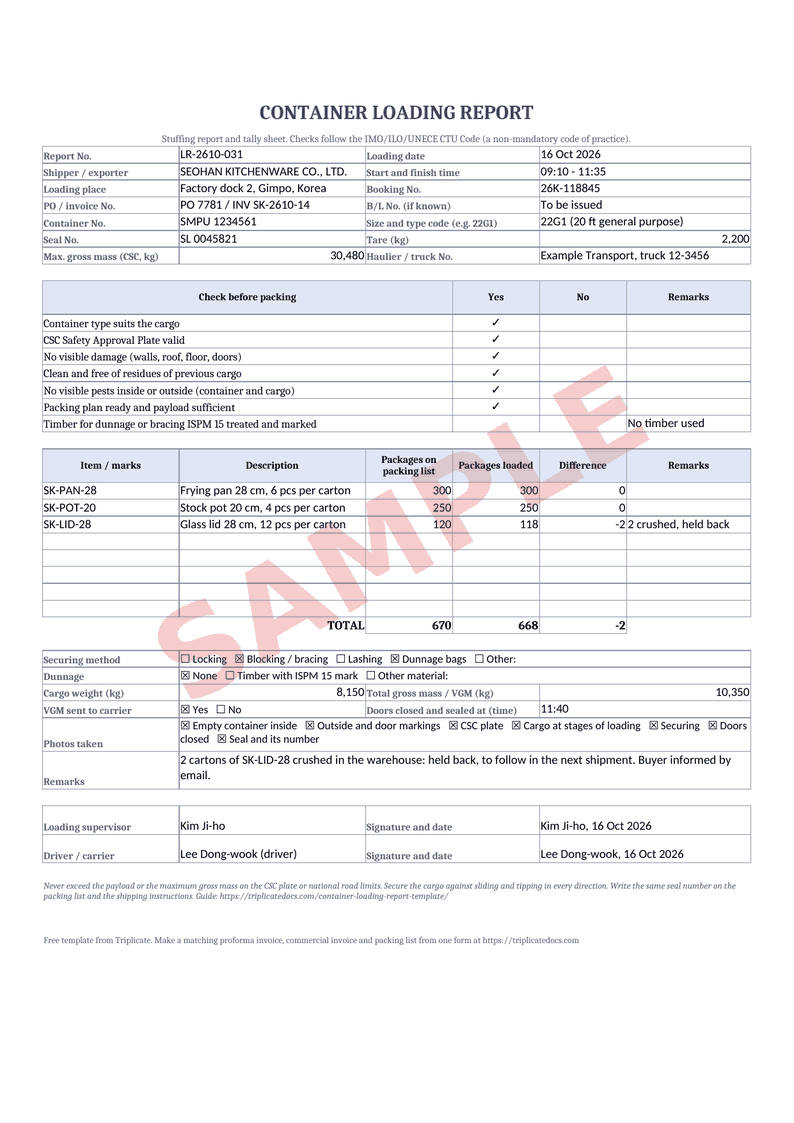
Buyers often ask the exporter for a loading report with photos to show that the right goods went into a sound, clean container and were properly secured. This sheet records the container and seal, the checks before packing, a tally of packages against the packing list, how the cargo was secured, the weight and the photos taken, with the names of the loading supervisor and the driver or carrier.
Download .xlsxAll free templates →
What the template covers
- Booking, B/L, PO and invoice numbers, loading place, date and start and finish times
- Container number, size and type code, seal number, tare and the maximum gross mass on the CSC plate
- Checks before packing: suitable type, valid CSC plate, no damage, clean and free of residues, no visible pests
- Tally of packages per item against the packing list, with the difference by formula
- Securing method (locking, blocking or lashing), dunnage and the ISPM 15 mark on any timber
- Cargo weight, total gross mass and whether the VGM has been sent to the carrier
- Photo checklist from the empty container to the closed doors and the seal
- Remarks, and the names and signatures of the loading supervisor and the driver or carrier
Sources
- International Maritime Organization, IMO/ILO/UNECE Code of Practice for Packing of Cargo Transport Units (CTU Code)
- COA, GSF, ICHCA International, TT Club and WSC, CTU Code – a quick guide (September 2020, via IPPC)
- International Maritime Organization, verification of the gross mass of packed containers (SOLAS VI/2)
Guides on this topic
Checks before packing
The IMO/ILO/UNECE Code of Practice for Packing of Cargo Transport Units (CTU Code) is a non-mandatory code of practice for everyone who packs, secures, receives and unpacks cargo units. Before packing, check that the container suits the cargo, that its CSC Safety Approval Plate is valid, that it is undamaged, clean and free of residues of previous cargo, and that the container and the cargo are free from visible pests inside and outside. Have a packing plan ready that keeps within the payload and puts the centre of gravity in the right place.
Tally, securing and weight
Count the packages as they go in and compare them with the packing list, so that differences are found before the doors close. Spread heavy cargo over the floor, prevent sliding and tipping in every direction by locking, blocking or lashing, and use only ISPM 15 treated and marked timber for dunnage and bracing. Never exceed the payload or the maximum gross mass on the CSC plate or national road limits, and make sure the verified gross mass (VGM) reaches the carrier before the cut-off.
Photos, seal and records
Photos give the buyer and the insurer evidence of the condition of the container and the cargo at loading: the empty container inside and outside, the CSC plate, the cargo at stages of loading, the securing, the closed doors and the seal with its number. Write the same seal number on the report, the packing list and the shipping instructions so that they match the bill of lading. Keep the report with the shipping documents; it helps if loss or damage is found at destination.
Common questions
What is a container loading report?
A record made at loading of the container and seal numbers, the condition of the empty container, the packages loaded against the packing list, how the cargo was secured and the photos taken. Buyers often ask for it with the shipping documents.
Who should sign the loading report?
The person who supervised the loading at the warehouse or factory, and usually the driver or carrier who takes the container, confirming the container and seal numbers.
What photos should be taken during container loading?
The empty container inside and outside, its CSC plate and door markings, the cargo at stages of loading, the securing and dunnage, the closed doors and the seal with its number visible.
Is the CTU Code mandatory?
No. The CTU Code is a non-mandatory global code of practice of the IMO, the ILO and UNECE, but carriers, buyers or national rules may require parts of it, and the VGM requirement under SOLAS is mandatory.
Does the loading report replace the packing list or the VGM declaration?
No. It is a record of the loading. The packing list, the VGM declaration and, where needed, the dangerous goods declaration are separate documents.
More free tools
Triplicate is free and keeps getting better. Found it useful? Support Triplicate ♥
Prefer no ads? Pro removes all ads · $1/month