Free product specification sheet template
A product specification sheet tells the supplier exactly what to make and how to pack it, and tells the inspector what to check. This sheet covers materials and composition, dimensions and weights with tolerances, colours and finish, the packing from unit to master carton, labels and marking, the regulations and tests that apply in your market, the approved sample and the inspection level, with a revision number and both parties' approval.
Download .xlsxAll free templates →
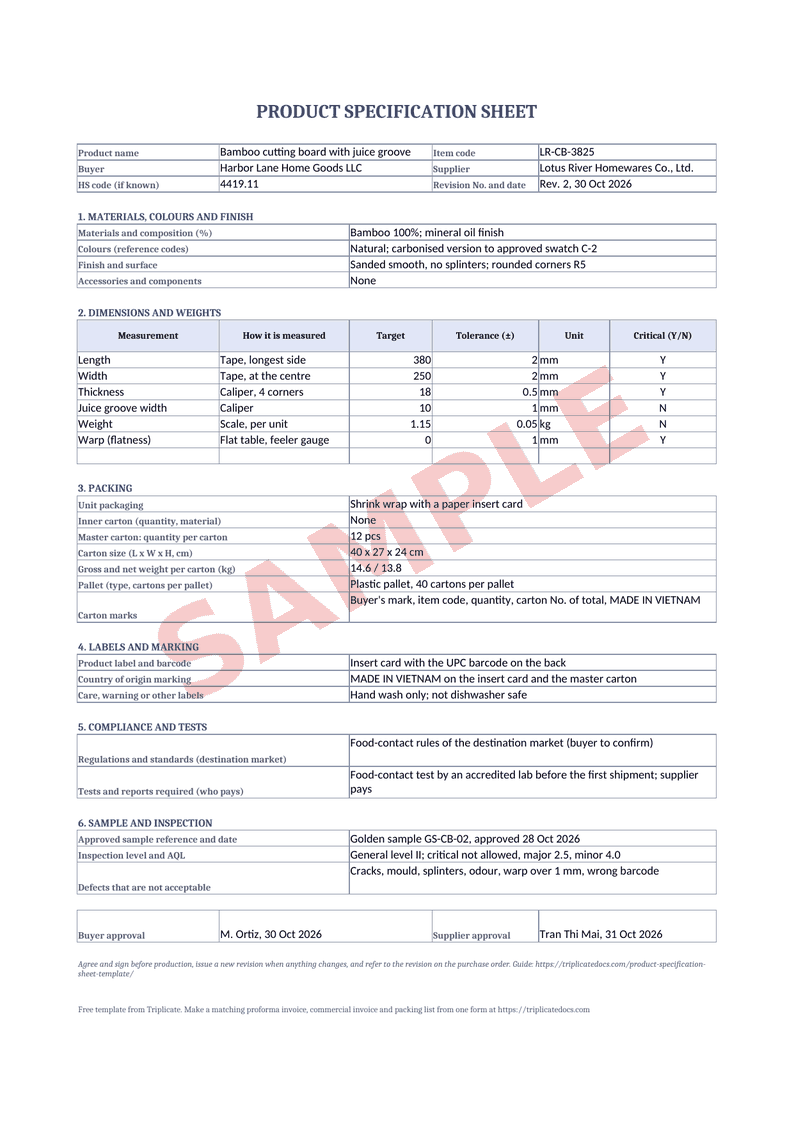
What the template covers
- Product name, item code, HS code if known, buyer and supplier, revision number and date
- Materials and composition, colours with reference codes, finish and accessories
- Dimensions and weights with tolerances, in a table you can extend
- Packing: unit packaging, inner and master carton, quantity per carton, carton size and gross weight, pallet
- Labels and marking: product label, country of origin, barcode, care or warning labels, carton marks
- Compliance: regulations and standards in the destination market, tests and test reports required
- Approved sample reference, inspection level and AQL, and defects that are not acceptable
- Approval by the buyer and the supplier, with names, signatures and dates
Sources
Guides on this topic
Why a specification sheet
Most quality disputes start with something that was never written down: a colour shade, a tolerance, a carton size or a label. A specification sheet agreed and signed before production gives the supplier a clear target, the inspector a checklist and both parties a reference if the goods do not match. Give it a revision number and send a new revision whenever something changes.
Tolerances, colours and packing
State each critical dimension and weight with a tolerance, for example 250 mm ± 2 mm, and say how it is measured. Give colours with a reference such as a colour standard code or an approved swatch, not only a name. Specify the packing down to the master carton: quantity per carton, carton size and gross weight, carton strength if needed, and the carton marks, because they decide how much fits in a container and how the goods arrive.
Compliance, marking and tests
List the rules that apply in your market, such as chemical restrictions, product safety standards and labelling requirements, and the tests and reports you need, with who pays for them. Include country of origin marking on the product or its packaging where the destination requires it. The sheet records what you require; the importer remains responsible for checking which rules apply to the product.
Common questions
What is a product specification sheet?
A document that describes a product in enough detail to make, pack and check it: materials, dimensions with tolerances, colours, packing, labels, compliance requirements and the approved sample.
Who should sign the specification sheet?
Both the buyer and the supplier, before production, so that the agreed specification can be used for the inspection and in any dispute.
How do I specify colours?
With a reference that both sides can check, such as a colour standard code or a physical swatch kept with the approved sample, and an acceptable tolerance if needed.
Should the specification sheet include packing?
Yes. Unit packaging, inner and master carton, quantity per carton, carton size and weight, and carton marks affect damage, labelling and how many units fit in a container.
Does the specification sheet replace the purchase order?
No. The purchase order or sales contract sets the price, quantity, delivery and payment terms; it should refer to the specification sheet and its revision number.
More free tools
Triplicate is free and keeps getting better. Found it useful? Support Triplicate ♥
Prefer no ads? Pro removes all ads · $1/month