Letter of Credit Meaning and How It Works: Step-by-Step Guide for Exporters
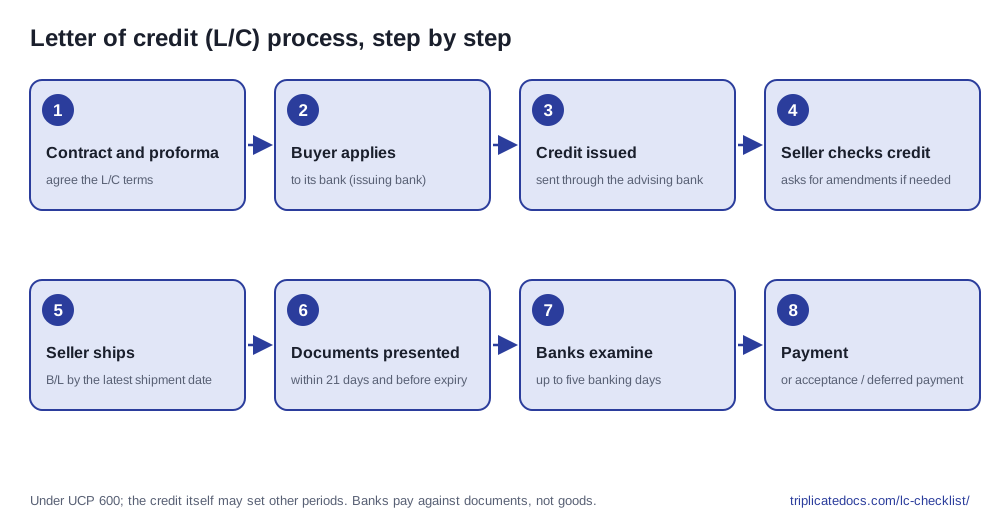
Under a letter of credit, the buyer's bank promises to pay you when you present documents that comply with the credit, so you are paid against paperwork, not against the goods. The steps run from the sales contract and proforma invoice to issuance and advising, a check of the credit with any amendments before shipment, shipment by the latest shipment date and presentation of matching documents within 21 days and before expiry. Each bank then has up to 5 banking days to examine them before it pays, at sight or at maturity, or refuses for discrepancies.
Checked against official sources: 2026-10
At a glance
The parties to a letter of credit
A letter of credit (L/C), or documentary credit, is the buyer's bank's promise to pay you if you present documents that comply with the credit. Credits are normally issued subject to the ICC's UCP 600, under which a credit is irrevocable even if it does not say so. The credit is separate from the sale contract, and banks examine only the documents presented, not the goods, so a single mismatched date, figure or wording can let the bank refuse to pay even when the goods shipped exactly as agreed.
- Applicant: the buyer, who asks its bank to issue the credit, usually on the basis of your proforma invoice.
- Issuing bank: the buyer's bank, which issues the credit and promises to pay against complying documents.
- Advising bank: the bank, usually in your country, that passes the credit on to you. It adds no promise of its own unless it also confirms the credit.
- Confirming bank: a second bank, usually in your country, that adds its own undertaking to honour or negotiate a complying presentation, at the issuing bank's request or with its authorization (UCP 600 Art. 2 and 8).
- Nominated bank: the bank with which the credit is available, where you present the documents. Under a credit available by negotiation it may buy your draft or documents and advance the money before it is reimbursed.
- Beneficiary: you, the seller, who ships the goods and presents the documents to be paid.
From sales contract and proforma invoice to an issued credit
Agree the credit in the sales contract before the buyer applies. Incoterms 2020 do not deal with the time, place, method or currency of payment, so write the payment term as its own line on the contract and the proforma invoice: sight or usance, confirmed or not, "subject to UCP 600", the transport document and who pays bank charges. A bare "L/C" says none of this. The US International Trade Administration (ITA) recommends L/Cs for higher-risk situations and new or less-established relationships, when you are satisfied with the credit standing of the buyer's bank; the drawbacks are cost and paperwork.
The buyer gives your proforma invoice to its bank to apply for the credit, and many credits describe the goods "as per proforma invoice No. ... dated ...". Show the Incoterm with its named place and "Incoterms 2020", the currency and the payment term on the proforma, and ask the buyer what its bank needs on it before it applies. The issuing bank then sends the credit to you through the advising bank, and through the confirming bank if one adds its confirmation. Clear wordings look like this:
- Irrevocable documentary credit available at sight, confirmed by a bank acceptable to the seller, subject to UCP 600.
- Irrevocable documentary credit available by deferred payment at 90 days after B/L date, subject to UCP 600.
Check the credit on arrival and ship on time
Read the credit in full as soon as it arrives and compare it with the final proforma and the contract. Query anything unworkable in writing, such as a shipment date you cannot make, a document you cannot obtain or an issuer you cannot use, and have the buyer arrange an amendment through the issuing bank before you ship, not after the documents are refused.
The transport document must be dated on or before the latest shipment date, and a marine bill of lading needs a dated on-board notation unless its printed wording already says shipped on board (UCP 600 Art. 20). If a delay is unavoidable, get the credit amended before that date passes. Then present the documents within 21 calendar days after shipment, unless the credit sets another period, and always before expiry (Art. 14(c)); missing either deadline is itself a discrepancy. Check in particular:
- Dates: expiry, latest shipment date and presentation period, with enough time between them to collect every document.
- Amount and tolerances: "about" or "approximately" allows 10% more or less; otherwise the quantity may vary by 5% unless stated in packing units or items, and the total drawn must not exceed the credit amount (Art. 30).
- Partial shipments: allowed unless the credit forbids them (Art. 31).
- Trade term: the same Incoterm, place and edition as your contract. If you sell FCA and the credit asks for an on-board bill of lading, agree the FCA A6/B6 option with the buyer and confirm it with its forwarder.
- Transport document: number of originals, how the consignee must read, freight prepaid or collect, and the ports of loading and discharge.
- Other documents: the insurance percentage on CIF or CIP, who must issue the certificate of origin and any inspection certificate, and any statement required on the packing list.
Preparing documents that match the credit
Build every document from one data set that follows the credit's wording. The commercial invoice is the one document whose goods description must correspond with the credit; the others may describe the goods in general terms that do not conflict with it (Art. 14(e)). Package counts, weights and volume must agree across the invoice, packing list and bill of lading, and the freight statement must fit the trade term: "freight prepaid" on CIF or CFR, "freight collect" on FOB or FCA.
- Commercial invoice: issued by the beneficiary, made out to the applicant and in the credit's currency (Art. 18), for an amount that does not exceed the credit after any tolerance. It need not be signed unless the credit asks. Do not title it "Proforma invoice": ISBP says an invoice under a credit is not to be identified as pro-forma or provisional. Repeat the credit's trade term and any proforma reference.
- Bill of lading: the carrier's name, signed by the carrier, master or a named agent, a dated on-board notation, the credit's ports, no clause declaring defective packaging or condition, and the full set of originals if more than one is issued (Art. 20). Surrender the originals for a telex release only if the credit calls for a copy showing that; ICC TA Briefing No. 17 (January 2026) sets out how credits should word it.
- Insurance document, on CIF or CIP: issued and signed by an insurer, underwriter or their agent, not a broker's cover note, in the credit's currency, for at least 110% of the CIF or CIP value unless the credit states otherwise, and dated no later than shipment or stating that cover starts by then (Art. 28).
- Certificate of origin: under ISBP 821 it must be signed, appear to relate to the invoiced goods and certify their origin. If the credit names an issuer, such as a chamber of commerce, only that issuer may issue it; if not, any entity, including the beneficiary, may.
- Packing list, if the credit asks for one: when the credit does not say who issues it or what it must contain, it is accepted as presented if it appears to fulfil its function and its data do not conflict; the shipper shown need not be the beneficiary (Art. 14(f) and (k)).
- Draft (bill of exchange) and any inspection, weight or beneficiary's certificates the credit names.
Examination, discrepancies, waiver and refusal
Present the complete set to the nominated bank. Each bank in the chain has up to 5 banking days after presentation to decide whether the documents comply (Art. 14(b)). The test is consistency, not identical wording: data must not conflict with the credit, another document or standard banking practice (Art. 14(d)), for which ISBP 821 is the ICC's reference. Triplicate's note on L/C discrepancies lists what banks refuse most often.
A bank that finds discrepancies must send one notice listing all of them within those 5 banking days, stating that it is holding, refusing or returning the documents; after that window it can no longer claim a discrepancy (Art. 16). If time remains before the presentation deadline and expiry, correct the documents and present again. Otherwise the only route to payment under the credit is a waiver: the applicant can waive the discrepancies and let the bank pay, but it is not obliged to. The sale contract still stands either way.
Issuing banks often deduct a discrepancy fee, commonly USD 50 to 150, from the proceeds; this is market practice, not a UCP rule, and is enforceable only if the credit states it. For electronic presentation, the eUCP (Version 2.1) supplements UCP 600 only when the credit allows it.
Getting paid: sight, deferred payment, acceptance, confirmation and transfer
How the credit is available decides when you are paid (UCP 600 Art. 2 and 6). At sight, the bank pays once it has complying documents. A usance credit, available by deferred payment or by acceptance of your draft, pays at maturity, for example 90 days after the B/L date. A credit available by negotiation lets a nominated bank buy your draft or documents, advancing, or agreeing to advance, the money before it is reimbursed.
Confirmation adds a second bank's undertaking to honour or negotiate a complying presentation. ITA suggests it when you are concerned about the foreign bank's credit standing or when political upheaval, economic collapse, devaluation or exchange controls could put payment at risk. Make confirmation by a bank acceptable to you part of the payment term, so the issuing bank requests it, and do not ship until it is added.
A transferable credit lets the beneficiary, for example a trading company, make the credit available to its own supplier as a second beneficiary. UCP 600 Article 38 gives exceptions for transferred credits, including to the rule that the invoice is made out to the applicant, so a supplier shipping under a transferred credit should check exactly which names and amounts its documents must show.
Step by step
- Agree the L/C in the sales contract and proforma invoice: sight or usance, confirmed or not, subject to UCP 600, documents required and who pays bank charges.
- Send a numbered proforma with the Incoterm, named place, currency and payment term, after asking the buyer what its bank needs on it.
- When the credit arrives, check it against the proforma and contract: expiry, latest shipment date, presentation period, amount, tolerances, documents, issuers and ports.
- Ask the buyer to have the issuing bank amend anything you cannot meet, and if you asked for confirmation, wait until it is added before shipping.
- Book the shipment so the bill of lading is dated on or before the latest shipment date, with the consignee, freight statement and originals the credit requires.
- Prepare the invoice, packing list, certificate of origin and other documents from one data set in the credit's wording; Triplicate's free L/C checklist and generator help keep them matching.
- On CIF or CIP, insure for at least 110% of the value, in the credit's currency, dated no later than shipment, unless the credit says otherwise.
- Cross-check every document against the credit and each other, then present the full set to the nominated bank within 21 days after shipment, or the credit's own period, and before expiry.
- If the bank sends a discrepancy notice, correct and present again while time remains; otherwise ask the buyer to waive the discrepancies.
Documents you usually need
- Sales contract and proforma invoice stating the L/C terms
- Letter of credit and any amendments
- Commercial invoice made out to the applicant, in the credit's currency
- Full set of original bills of lading, or the transport document the credit calls for
- Insurance policy or certificate, for CIF or CIP shipments
- Certificate of origin from the issuer the credit names
- Packing list, if the credit calls for one
- Bill of exchange (draft) and any inspection or beneficiary's certificates required
Common problems and how to avoid them
What to do: Raise it in writing as soon as the credit arrives and get an amendment through the issuing bank before you ship.
What to do: Present a commercial invoice issued by you, made out to the applicant, in the credit's currency, with the credit's goods description.
What to do: Ask the carrier for a dated on-board notation; if a delay is unavoidable, get an amendment before the date passes.
What to do: Calendar both deadlines when the credit arrives and present as soon as the transport document is ready.
What to do: Apply to the issuer the credit names, or ask the buyer to amend the credit before shipment.
What to do: Make all documents from one data set, check the B/L draft before issue, and match freight prepaid or collect to the Incoterm.
Sources
- ICC Uniform Customs and Practice for Documentary Credits (UCP 600) International Chamber of Commerce (ICC)
- International Standard Banking Practice (ISBP) ICC Academy
- Documentary credits: Rules, guidelines and terminology ICC Academy
- A guide to types of documentary credit (UCP 600) ICC Academy
- eUCP Version 2.1 - ICC Uniform Customs and Practice for Documentary Credits International Chamber of Commerce (ICC)
- Technical Advisory Briefing No. 17: Handling of "surrendered" bills of lading under documentary credits subject to UCP 600 (27 January 2026) ICC Banking Commission (copy published by ICC Austria)
- The Trade Finance Guide: A Quick Reference for U.S. Exporters (2022 edition), chapters on cash-in-advance, letters of credit, documentary collections, open account, export credit insurance and export factoring International Trade Administration, US Department of Commerce
- Introduction to the Incoterms® 2020 rules ICC Digital Library, International Chamber of Commerce
- Discrepancy Fee Letter of Credit Consultancy Services
Rules change often. This note is practical guidance based on the sources above, not legal advice. Confirm current requirements with the authority, your importer or a licensed customs broker before you ship.
Trade notes
Common questions
What is the difference between the issuing, advising and confirming bank?
The issuing bank is the buyer's bank and makes the promise to pay. The advising bank passes the credit on to you. A confirming bank, usually in your country, adds its own undertaking to honour or negotiate, so you are not relying on the issuing bank alone.
How long do I have to present documents under a letter of credit?
Within 21 calendar days after the shipment date if the credit sets no other period, and always before the credit expires (UCP 600 Art. 14(c)). Each bank then has up to 5 banking days to examine them.
What happens if the bank finds a discrepancy?
It sends one notice listing every discrepancy and holds, refuses or returns the documents. You can correct and present again if time remains; otherwise the buyer may waive the discrepancies, but does not have to.
What is the difference between a sight and a usance letter of credit?
Under a sight credit the bank pays once it has complying documents. A usance credit, available by deferred payment or by acceptance of a draft, pays at maturity, for example 90 days after the B/L date.
More free tools
Triplicate is free and keeps getting better. Found it useful? Support Triplicate ♥
Prefer no ads? Pro removes all ads · $1/month